Sewer Line Sag (Belly in the Pipe): How It Causes Repeat Blockages
What is a “sewer line sag” (belly in the pipe)?
A sewer line sag—often called a belly in the pipe—is a section of your underground sewer or stormwater drain line that has dipped lower than it should. Instead of the pipe keeping a steady downhill slope, it forms a shallow “valley” where water naturally collects.
In a perfect world, wastewater leaves your home and keeps moving downhill until it reaches the main sewer connection. But when there’s a belly, that smooth flow gets interrupted. Water slows down, solids settle, and the pipe starts acting like a catching bowl. Even if you clear the drain today, the belly can keep creating the same problem again next week.
This is one of the most common “repeat offender” issues we see in residential plumbing in penrith, especially in homes with older pipework, shifting soil, or tree-heavy blocks. And the tricky part is: you can’t confirm it just by guessing or using DIY drain products. It typically needs professional diagnosis using tools like CCTV drain camera inspections and pipe locating equipment.
Related services we use to confirm and manage this issue:
- CCTV drain camera inspections (to see the belly and standing water)
- Drain/sewer cleaning and high-pressure water jetting (to clear buildup temporarily)
- Inspection and testing (to check how the system flows and vents)
Why a belly in the pipe keeps causing blockages (the simple explanation)
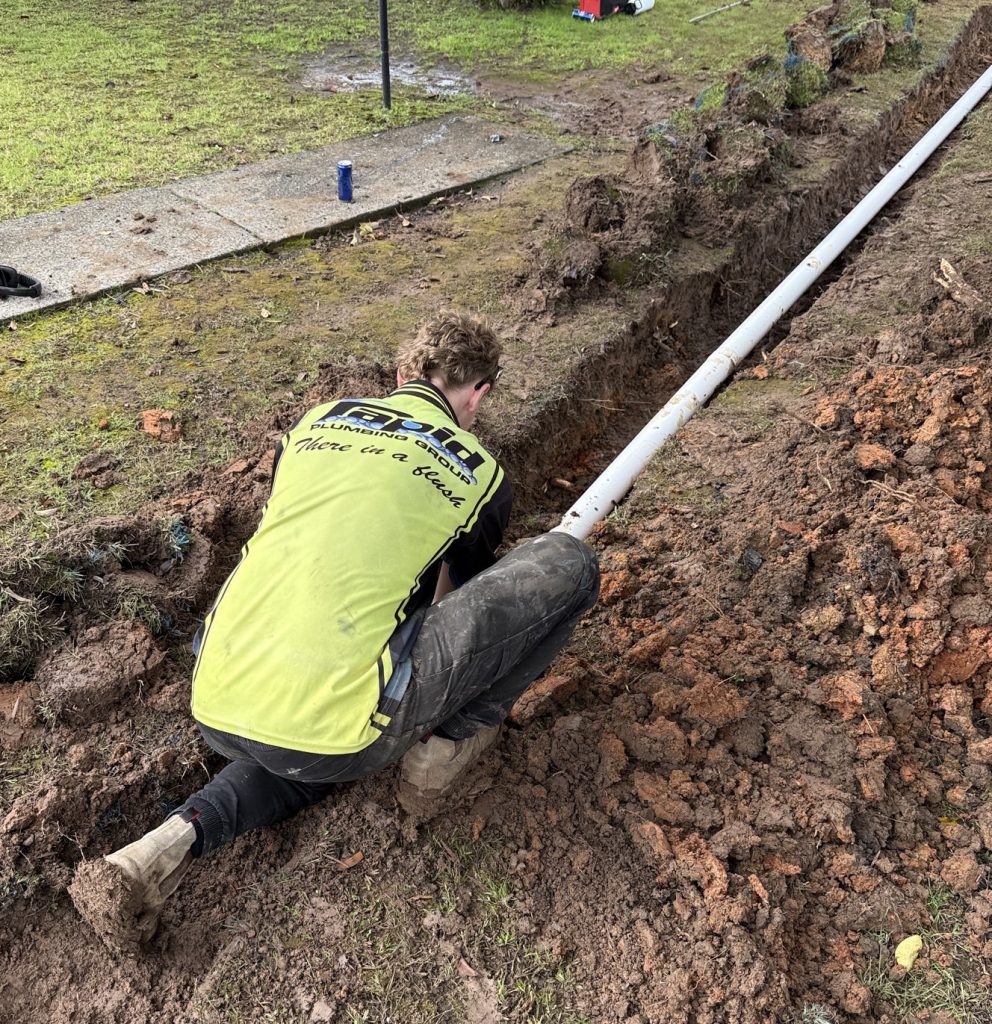
Think of your sewer line like a long slide that needs to stay tilted downward. If the slide has a dip in the middle, everything that goes down the slide slows down and piles up in that dip.
A belly causes repeat blockages because it creates a zone where waste can’t fully clear out. Here’s what happens in real life:
- Water pools in the low spot
Even after you stop using water, some wastewater stays behind in the belly instead of draining away. - Solids settle in the pooled area
Toilet paper, sludge, food scraps, and other waste settle at the bottom because the flow isn’t strong enough to carry them through. - Grease and soap scum stick to the walls
Grease from the kitchen and soap scum from showers can coat the pipe, making it tacky inside—so debris clings faster. - The opening narrows
As buildup thickens, less water can pass through quickly. - You get blockages that “mysteriously” return
You might clear it, but the belly is still there, so the system goes back to trapping waste.
That’s why some homes end up in a frustrating cycle: clear → temporary relief → blocked again.
Related services we use when the symptom is a blockage:
- Blocked drain clearing (fast response, including emergency callouts)
- High-pressure water jetting (best for grease, sludge, and soft buildup)
- Camera inspections (to confirm whether a belly is the real root cause)
Common reasons sewer lines sag in Australian homes
Most sewer bellies don’t happen overnight. They form slowly due to pipe and ground conditions changing over time.
1) Ground movement and soil compaction
Soil settles naturally, especially after years of rain, drought, and landscaping changes. When the trench under the pipe compresses or shifts, the pipe can drop into that gap.
This is common in areas where the soil is reactive or where there’s a history of excavation and refilling.
2) Poor installation or incorrect fall (grade)
Sometimes the sag isn’t “age”—it’s an installation issue. If the pipe wasn’t laid with the correct fall from the start, it can develop low points that behave like bellies.
This tends to show up in renovations, extensions, or DIY drainage work.
3) Ageing pipes, joint movement, or deformation
Older pipes can shift at the joints, crack, or deform. Even a small joint drop can create a lip that catches paper and waste—and once buildup starts, it accelerates fast.
4) Tree roots and moisture imbalance
Tree roots are a huge factor in Australian properties. Roots chase moisture and can enter small cracks or joints. While roots don’t always “create” a belly directly, they can:
- disturb soil support,
- widen weak points,
- and worsen the flow problem once waste starts collecting.
5) Heavy rain, stormwater issues, or poor yard drainage
When soil becomes saturated, it can wash away fine material under the pipe. Over time, unsupported sections sag.
Related services we use for these causes:
- CCTV drain camera inspections (to identify the exact reason + location)
- Tree root removal (to stop repeat root intrusion)
- Drain repairs and pipe replacements (when joints or pipe sections have failed)
Signs your sewer line might have a belly
Because the belly is underground, your home gives you “signals” through recurring plumbing problems. These are the most common symptoms we see:
Repeat blockages in the same area
If the same toilet, bathroom, or gully trap blocks repeatedly, that’s a red flag. A simple clog usually clears and stays clear. A belly doesn’t.
Slow drains across multiple fixtures
When multiple drains slow down—like the shower, toilet, and laundry—it can mean the main line is restricted.
Gurgling sounds or “glugging” after water use
You might hear bubbling in a sink, toilet, or floor waste. That often happens when the pipe is partially restricted and airflow becomes unstable.
Sewage smells that come and go
Standing wastewater in a low spot can produce odours, especially when weather is warm.
Overflow or backup during heavy water use
You might notice problems when:
- the washing machine drains,
- multiple showers are running,
- the dishwasher empties,
- or guests are using the toilet frequently.
Related services we use when these signs appear:
- 24/7 emergency plumbing (for active backups)
- CCTV drain inspections (for diagnosis)
- Blocked drain clearing and sewer cleaning (for immediate relief)
Why clearing the drain doesn’t “fix” a belly
This is the part most homeowners don’t realise: a belly is a structural and slope issue, not just “dirt in the pipe.”
High-pressure jetting helps—but it’s not a permanent fix
Jetting is excellent at removing grease, sludge, and soft debris. It can restore flow quickly and is often the right first step when you have a blockage.
But jetting can’t change the shape of the pipe or lift the sagged section.
If your line has a belly, jetting is often best seen as:
- a short-term relief tool, and
- a prep step before inspection and repair.
Drain snakes can punch through, but leave problems behind
Drain snakes are sometimes used for quick access blockages. But in belly situations, they may:
- leave sludge behind,
- not clear the low spot fully,
- and allow the same blockage to rebuild fast.
Related services we use in the right order:
- Jetting to clear the line
- CCTV drain camera inspection to diagnose
- Drain repair/pipe replacement to solve permanently
What happens inside a belly over time (and why it gets worse)
A belly often starts small, then becomes a repeat problem. Here’s what typically happens over months or years:
- Water sits in the belly constantly
- Sediment and solids settle
- Grease and soap create a sticky lining
- Paper and waste cling more easily
- The belly becomes a “collection zone”
- Blockages happen more often
- Pressure increases and backups become more severe
- Joints can fail, cracks can widen, and leaks can start
And once a pipe begins leaking near the belly, it can soften the surrounding soil and make the sag worse—creating a cycle of damage.
Related services that help prevent escalation:
- Leak detection (if there’s suspected damage)
- Sewer line repairs (before collapse happens)
- Regular inspections and testing for repeat-problem homes
Is a sewer belly dangerous? What can go wrong?
A belly might feel like a nuisance, but it can turn into something bigger:
- Sewage backing up indoors (toilets, showers, floor wastes)
- Overflow into the yard (unsafe and unpleasant)
- Hidden leaks causing soil washout or sinkholes
- Damage to foundations or paving in worst-case situations
- Health risks due to bacteria exposure and contaminated wastewater
If you’ve had repeat blockages, it’s smart to treat it as a “fix it right” issue, not a recurring maintenance task.
Related emergency and safety services:
- 24/7 emergency plumbing response
- Blocked drain clearing and cleaning
- Gas leak detection (separately, but often checked during major plumbing investigations)
- Leak detection (to confirm if sewer damage is also leaking)
How a licensed plumber confirms a belly in the pipe
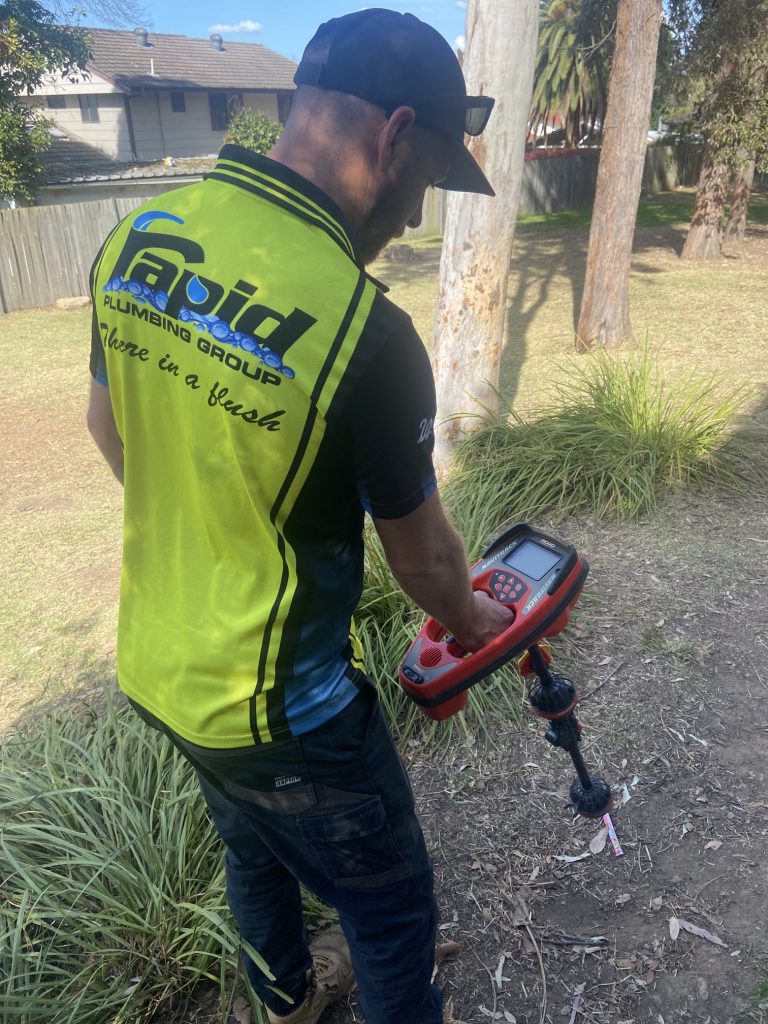
You don’t want a plumber guessing underground. A proper diagnosis is evidence-based.
1) CCTV drain camera inspection (most important)
A camera inspection shows exactly what’s happening inside your drain:
- standing water (classic belly sign)
- sludge zones
- grease buildup
- cracked joints
- tree roots
- offset pipes or partial collapse
It also helps you avoid paying for “the wrong fix.”
2) Locating the problem section
Once we find the belly on camera, we use locating tools to mark where that section sits underground. This is critical if excavation or targeted repairs are needed.
3) Flow testing and fixture checks
We may run water from key fixtures to observe how the system handles flow. We also check whether slow drainage is linked to:
- venting issues,
- fixture traps,
- or the main line itself.
4) Inspection and testing across related plumbing
Sometimes we expand checks to ensure there aren’t other contributing causes, such as:
- shower leaks behind walls,
- overflow problems in gully traps,
- stormwater mixing issues,
- or damaged underground junctions.
Related services we use here:
- CCTV drain inspections
- Inspections and testing
- Leak detection (water/shower/pool/gas)
- General plumbing troubleshooting
Repair options: how you actually fix a sewer line belly
The correct fix depends on how severe the belly is and what else is happening in that section of pipe.
Option A: Targeted excavation and regrading (best true fix)
This is the most direct solution because it:
- removes the sagged section,
- rebuilds proper support underneath,
- reinstalls pipe with correct fall,
- and restores full flow.
Best for:
- significant bellies
- pooling that never clears
- joint separation or damage
- repeated blockages for years
Option B: Replace a longer section (when pipe condition is poor)
If the pipe is old and failing in multiple places, it can be smarter to replace a longer run rather than patching one dip.
Best for:
- brittle or damaged pipes
- multiple offsets and cracks
- repeated root intrusion
Option C: Pipe relining (only in specific cases)
Relining is great for sealing cracks and joints and preventing roots from re-entering. But it doesn’t fix pipe fall.
Relining may help when:
- the belly is minor,
- there’s no major pooling,
- the main issue is cracks/roots.
Option D: Pipe bursting (replacement with reduced trenching in some cases)
Pipe bursting can replace long sections without opening the entire trench, but access points are still needed.
Best for:
- long runs
- limited access areas
- full replacement needs
Related services we provide around repairs:
- Drain/sewer repairs
- Pipe replacements
- Drain cleaning and jetting (pre- and post-repair)
- CCTV inspections (before and after to confirm success)
Can you prevent a sewer belly?
You can’t always prevent soil movement, but you can reduce how quickly problems build up—and catch issues early.
Simple prevention tips that actually work
- Don’t pour cooking grease down the sink
- Avoid flushing wipes (even “flushable” ones)
- Use strainers in sinks and showers
- Schedule CCTV checks if your home is older or you’ve had repeat blockages
- Get tree roots inspected and removed early
If you’re already having repeat problems
Prevention isn’t enough—you need a proper diagnosis. Repeated clearing without inspection often becomes more expensive in the long run.
Related services that help reduce recurring issues:
- CCTV drain inspections
- Tree root removal
- Drain cleaning and jetting
- Water filtration solutions (not directly related to belly pipes, but often requested when improving overall home plumbing)
When should you call a plumber?
Call a licensed plumber if:
- you’ve had two or more blockages recently,
- your toilet is backing up or overflowing,
- multiple drains are slow at the same time,
- you smell sewage regularly,
- you’ve had roots removed but it keeps blocking again.
If the problem is severe or active, emergency help is best—especially to prevent property damage.
Quick answers (AEO-friendly)
What is a belly in a sewer pipe?
A belly is a dip in the sewer line where water pools, causing waste to settle and repeatedly block the pipe.
Why does my drain keep blocking after it’s been cleared?
Because clearing removes the blockage, but not the cause—like a belly in the pipe, tree roots, or damaged joints.
Can jetting fix a belly permanently?
No. Jetting clears buildup, but the sag remains. A permanent fix usually requires repair or replacement.
What’s the best way to confirm a belly?
A CCTV drain camera inspection is the most reliable way to confirm and locate it.
How Blue Mountains Local Plumber can help (and stop the blockages for good)
If you’re dealing with repeat blockages, you need more than a quick clear—you need a team that can diagnose properly and fix the cause.
At Blue Mountains Local Plumber, we provide complete solutions for homeowners and businesses, including fast response support for ongoing drain issues in residential plumbing in penrith.
Here’s how we help with belly-in-pipe and repeat blockage problems:
- 24/7 emergency plumbing for overflowing toilets, backed-up drains, and urgent sewer issues
- Blocked drain clearing for kitchens, bathrooms, laundries, and main lines
- High-pressure water jetting to remove grease, sludge, and recurring buildup
- CCTV drain camera inspections to confirm the belly and show what’s happening inside the line
- Drain and sewer cleaning to restore flow and reduce re-blockages
- Tree root removal to eliminate root-related restrictions
- Leak detection (water, shower, pool, and gas) to check for hidden damage around the sag
- Sewer line repairs and pipe replacement to correct the fall and permanently fix the belly
- General plumbing repairs and installations (taps, toilets, showers, inspections and testing)
- Hot water system supply, installation, servicing, and repairs (gas, electric, instant, heat pumps, solar, and commercial hot water)
- Gas fitting and gas leak detection for safe, compliant gas plumbing
- Water filtration solutions for better water quality at home or onsite
If you’re tired of paying to clear the same drain over and over, let’s find the real cause and fix it properly.
📞 Call Blue Mountains Local Plumber on 243125619 to book a CCTV drain inspection, request an urgent blocked drain callout, or get expert advice today.