Recurring Blocked Drains After Jetting: What Could Still Be Wrong
If you’ve had your drains jetted and they seemed fine… but the blockage keeps coming back, you’re not alone. A lot of homeowners think high-pressure water jetting is a “one-and-done” fix. Jetting is one of the best drain-clearing tools available—but it’s still possible for a drain to block again if the real cause hasn’t been fully removed, identified, or repaired.
In residential plumbing in Penrith, recurring drain issues are common because many homes deal with a mix of everyday buildup (grease, soap, hair) plus outdoor factors like tree roots, shifting ground, and older pipe materials. Jetting clears the symptom (the immediate blockage), but the reason it blocked in the first place may still be sitting in the line—waiting to cause the next backup.
This guide explains the most common reasons drains keep blocking after jetting, what warning signs to watch for, and what a plumber can do to stop the problem for good—without confusing jargon. Along the way, I’ll also show where professional services like CCTV camera inspections, drain/sewer cleaning, leak detection, and pipe repairs fit in—because those are often the missing pieces after jetting.
What “jetting” actually does (in simple terms)
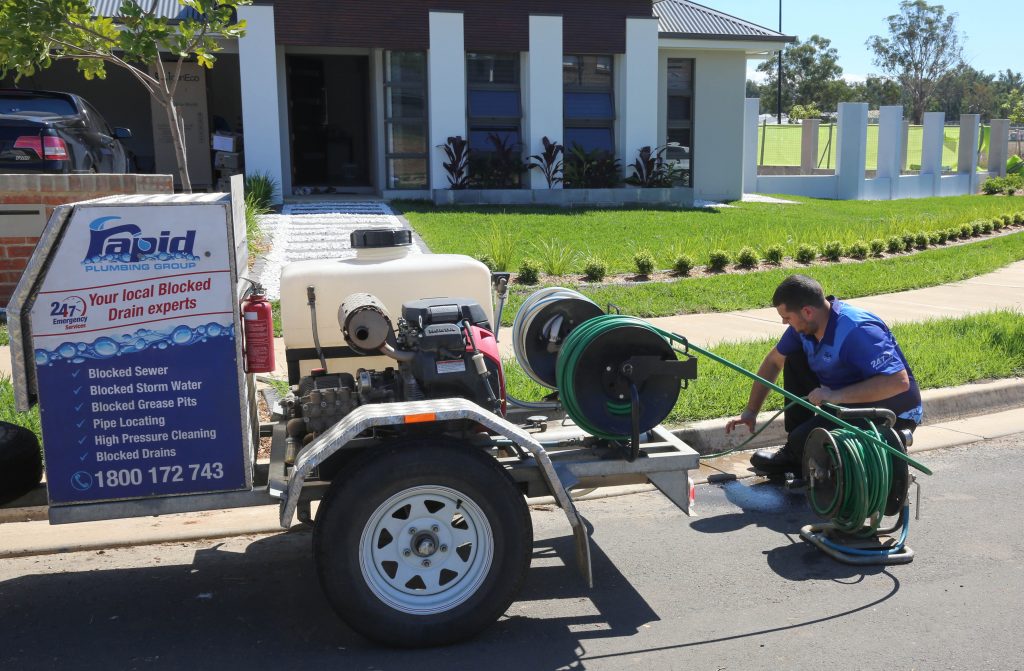
High-pressure water jetting uses a specialised hose and nozzle that blasts water through the pipe. The pressure scours the pipe walls, breaks up soft clogs, and pushes debris out toward the main line. In many homes, it’s the fastest way to restore flow without digging or pulling pipes apart.
Jetting can remove:
- Grease and sludge buildup that coats the inside of kitchen pipes
- Soap scum and hair that builds up in bathroom lines
- Food residue and soft blockages caused by daily use
- Silt, sand, and dirt that can wash into stormwater drains
- Small roots and loose debris that haven’t fully “locked” into the pipe
But here’s the key: jetting is a cleaning tool, not a pipe repair tool.
Jetting can’t always fix:
- Broken or collapsed pipes (water can’t “rebuild” pipe walls)
- Pipes that have sunk or shifted out of alignment
- Severe root intrusion where roots keep re-growing through cracks/joints
- Poor pipe design (wrong fall/gradient, sharp turns, poor connections)
- Internal pipe damage like cracks, holes, corrosion, or heavy scaling
That’s why at Blue Mountains Local Plumber, we often pair jetting with CCTV drain camera inspections and drain/sewer cleaning checks—so we can confirm the line is actually clear end-to-end and spot anything that jetting can’t solve.
How soon is “too soon” for a blockage to come back?
A drain can block again in a few days, weeks, or months depending on the cause. The timing is a massive clue.
As a rough guide:
- Within days to 2 weeks: usually a structural issue, heavy root problem, a partially collapsed line, or something was missed (like a partial obstruction behind a bend). This is when a camera inspection becomes essential.
- Within 1–3 months: often recurring roots, a damaged joint, a belly in the pipe, or grease re-building quickly because the pipe is rough or has low points where debris settles.
- Every time it rains: likely stormwater issues, silt/mud ingress, broken outdoor lines, or debris being washed into grates and pushed into the pipe. This is where blocked drain clearing + stormwater drain cleaning helps, and sometimes repairs are needed.
- Every few months like clockwork: a repeat pattern often means the system has a “trap point” (bad fall, offset joint, recurring grease location) and needs more than just another jet.
If your drain keeps blocking on a pattern, it’s usually cheaper long-term to stop paying for repeat callouts and instead get a proper diagnosis + targeted repair. That’s exactly why our service includes not only emergency drain clearing but also general plumbing inspections/testing and CCTV camera diagnostics to find the real cause.
The #1 reason drains block again after jetting: tree roots still have a “way in”
Jetting can cut and flush out some roots, especially fine “hair roots.” But if the pipe has a crack, joint gap, or broken section, roots can grow back—because the pipe is still leaking tiny amounts of water into the soil, and roots chase that moisture like a magnet.
In Penrith-area homes, roots are especially common in:
- Older clay pipes
- Pipes with aging joints
- Long runs under gardens, trees, or nature strips
Signs tree roots are still the problem
- Gurgling drains, especially toilets
- Slow drainage that gradually gets worse again
- Blockages returning more often in warmer months
- Toilets bubbling when the shower or sink is used
- Wet patches or extra-green grass near the drain line
- A smell outside near drain access points after heavy water use
What actually fixes recurring root intrusion
To stop repeat blockages, you usually need one of these:
- CCTV drain camera inspection to locate where roots enter and how severe they are
- Tree root removal using the right tools + follow-up cleaning
- Drain/sewer cleaning to fully clear root debris (so it doesn’t re-clump further down)
- Pipe relining (a non-dig option in many cases) to seal cracks and joints from the inside
- Targeted excavation and replacement if the pipe is collapsed, badly offset, or too damaged to reline
At Blue Mountains Local Plumber, root problems are one of the most common reasons customers call us back after “a drain was already jetted.” The fix isn’t always “more pressure”—it’s often finding the entry point and sealing it.
Grease can come back fast—especially if it’s hiding in a damaged pipe
Kitchen drains are one of the biggest causes of repeat blockages in homes. Even after jetting, grease can reattach quickly if the pipe interior is rough, cracked, or already narrowed by old buildup. And grease doesn’t need weeks and weeks to return—sometimes it rebuilds in no time if a pipe has the wrong fall.
Here’s what happens:
- Grease goes down warm and liquid
- It cools inside the pipe and sticks to the walls
- Food scraps catch on that greasy coating
- The pipe slowly narrows again
- One heavy cooking week or dishwasher cycle pushes it into a full blockage
Clues the issue is grease (not just “bad luck”)
- Kitchen sink drains slowly but other fixtures seem okay
- You get smells that come and go (especially after hot water use)
- Blockages happen after heavy cooking, dishwashing, or oily foods
- Water backs up when the dishwasher drains
- The pipe clears after jetting but “feels sluggish” again soon
What helps long-term (besides “don’t pour oil”)
- CCTV inspection to check if the pipe has a belly, rough sections, or damage that grease sticks to
- Drain cleaning + maintenance jetting if your home has a known grease-prone line
- General plumbing repairs if the issue is linked to poor connections, an older trap setup, or incorrect pipe fall
- Water filtration solutions can also help reduce certain sediment buildup issues in some homes (not a grease cure, but it can help overall plumbing performance depending on water quality and fixtures)
We also often combine jetting with inspections and testing to make sure your kitchen line drains freely and isn’t pushing back into other fixtures.
A “partial blockage” might still be there (and it only takes one snag)
Sometimes jetting restores flow, but a partial obstruction remains—like a lodged object, built-up scale, or a clump stuck behind a bend. The water moves again, so it looks “fixed,” but the next buildup catches on that snag and blocks fast.
Common partial blockage causes:
- Wet wipes and “flushable” wipes (they don’t break down like toilet paper)
- Too much toilet paper in older pipes
- Kids’ toys or bathroom items
- Sanitary products
- Foreign objects washed into outdoor grates
- Heavy mineral scale buildup in older pipes
How plumbers confirm this (without guessing)
A CCTV drain camera inspection shows whether:
- the pipe is fully clear
- an object is still lodged inside
- there’s narrowing from corrosion or scale
- debris is hanging up on an offset joint or damaged section
If there’s an object, we may follow up with:
- Targeted drain clearing (sometimes the object needs different tooling than a standard jet)
- Drain/sewer cleaning to remove the gunk that keeps collecting around it
- Repairs or replacement if the snag is structural (like a deformed pipe)
The pipe might be cracked, offset, or collapsed (jetting can’t repair that)
This is a big one: the blockage keeps returning because the pipe itself is failing.
Common structural drain problems
- Cracks: let in roots and dirt
- Open joints: older pipes can separate slightly at connections
- Offset joints: sections don’t line up perfectly, creating a “lip” that catches debris
- Collapsed pipe: the line is partially or fully crushed, often by ground movement or load above
- Deformed pipe: some materials can warp or flatten over time
Signs you might have pipe damage
- Blockages returning very quickly
- Frequent backups in multiple fixtures
- Water backing up from an outdoor gully
- A persistent sewage smell (indoors or outdoors)
- Soggy ground, sinkholes, or unexplained damp patches in the yard
- Problems that began after driveway work, renovations, or heavy rain events
In these cases, we often use:
- CCTV camera inspections to locate the damage precisely
- Leak detection services (water/shower/pool/gas leak detection) if there are signs of hidden leaks contributing to ground saturation
- Drain repairs or pipe replacement if the pipe is physically failing
- Pipe relining where suitable (less digging, faster turnaround in many cases)
You may have a “belly” in the pipe (a sag where water and debris sit)
A pipe belly (also called a sag or backfall) happens when a section of pipe sinks. Instead of draining smoothly, water pools in that low point. Debris settles there too—like grease, sand, hair, and sludge.
Jetting can clear a belly temporarily, but because the shape of the pipe hasn’t changed, buildup returns. This is one of the most frustrating “repeat blockage” causes because it can feel like the drain is cursed.
Signs of a pipe belly
- Repeated blockages with no roots found
- Blockages that happen more often after heavy water use
- Drains that are slow most of the time
- The problem improves after jetting, then slowly returns again
A camera inspection usually spots this clearly because we’ll see standing water where there shouldn’t be.
What fixes it depends on severity:
- Minor belly: sometimes maintenance cleaning keeps it manageable
- Significant belly: often needs drain repairs or partial pipe replacement to restore proper fall
The issue might be in the main sewer line, not the “blocked drain” you see
Many homeowners treat a blocked toilet or shower as a local issue. But if the main line is partially blocked, everything connects to it—so multiple drains can start acting up.
Signs the main line is involved
- Toilet gurgles when the sink drains
- Shower backs up when the washing machine runs
- Multiple drains are slow at the same time
- Overflow in an outdoor gully trap
- Sewage smell outside near drain points
In this situation, jetting one branch line may not solve the main issue. The entire run needs to be checked, cleared properly, and ideally confirmed with camera.
This is also where 24/7 emergency plumbing matters—because a main line backup can turn into an overflow quickly, especially if you keep using water in the home.
Stormwater drains can re-block after jetting (especially after rain)
Stormwater drains deal with:
- Leaves and twigs
- Dirt and silt
- Small stones
- Mulch and garden debris
- Roof debris (like broken tile fragments or gutter grit)
Jetting helps, but if the stormwater line has a break, poor fall, or an entry point for soil, silt can wash back in and settle again.
Red flags for stormwater trouble
- Yard drains overflow during rain
- Downpipes back up or overflow
- Water pools near grates even when they look clear
- The same drain floods every heavy rainfall
How we usually tackle it:
- Camera inspections to check for breaks, collapse, or soil ingress
- Drain cleaning to remove silt and debris end-to-end
- Blocked drain repairs if the line is damaged
- Advice on prevention like grate upgrades or better debris control around problem areas
Bad pipe design can cause repeat blockages (even if nothing is “broken”)
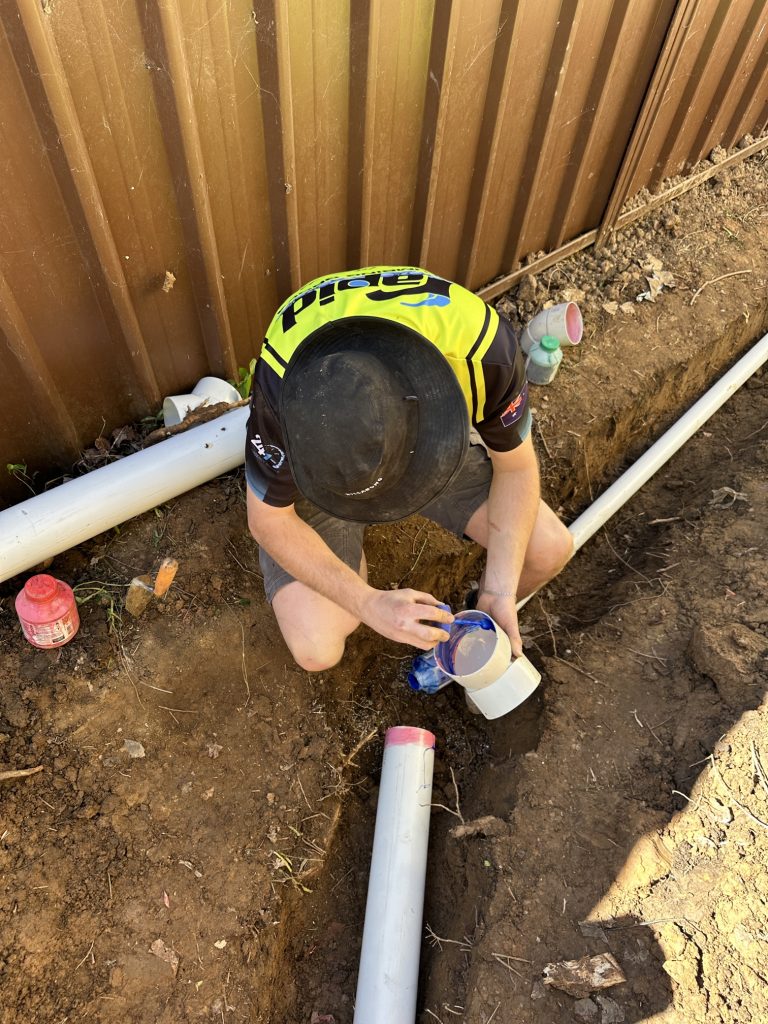
Sometimes nothing is technically broken—the drain just isn’t built in a clog-friendly way.
Common design problems:
- Too many tight bends
- Pipe size that’s too small for the household’s usage
- Poor connections where lines meet at awkward angles
- Flat sections with not enough fall
- Long runs without good access points (making thorough cleaning harder)
This is common in older homes and in renovations where new plumbing gets tied into old systems.
A plumber may recommend:
- Reconfiguring a small section to improve flow
- Adding proper access points for future cleaning
- Upgrading a section of pipe to a better size/layout
- General plumbing repairs and installations to correct fixture connections contributing to flow issues
Why DIY products can make recurring blockages worse
When drains block repeatedly, it’s tempting to reach for store-bought products. The problem is:
- Many cleaners don’t remove roots, objects, or structural issues
- They can harden grease into thicker clumps
- Some products can damage pipes and seals over time
- They can create safety risks for plumbers later (chemical exposure)
If you’re dealing with repeat blockages, the safer path is:
- Stop guessing
- Get a camera inspection
- Fix the root cause (roots, belly, damage, object, grease trap point)
The best next step: CCTV camera inspection (so you stop guessing)
If jetting didn’t give you lasting results, the fastest way to find the real cause is a CCTV drain camera inspection. It lets your plumber see:
- where the blockage forms
- whether roots are present (and exactly where they enter)
- if joints are offset or separated
- if there’s a belly holding water
- whether the pipe is cracked, broken, or collapsed
- how severe the internal buildup is
This is how you move from “clearing” drains to fixing drains.
From there, solutions become targeted:
- Jet again, but with the right nozzle and technique, then confirm clearance on camera
- Root removal and an approach to reduce regrowth
- Pipe relining to seal the line internally
- Drain repairs or replacement if the line is beyond relining
- Leak detection if damage is linked to hidden water movement underground
Quick checklist: When to call a plumber again (don’t wait)
Call a professional sooner if you notice:
- Sewage smell inside or outside
- Toilet bubbling or gurgling regularly
- Water backing up into shower, bath, or floor drains
- Overflow at the gully trap
- Blockages returning within a month of jetting
- Slow drains in multiple areas at once
- Any overflow risks (especially if you have only one bathroom)
These can signal a main line issue or pipe damage—both of which can get worse (and more expensive) if ignored.
How to reduce the chance of future blockages (simple habits that help)
You can’t control tree roots or old pipes, but you can reduce buildup triggers.
In kitchens:
- Don’t pour oil down the sink (even “a little bit”)
- Wipe oily pans before washing
- Use sink strainers to catch scraps
- Run hot water after washing greasy dishes
In bathrooms:
- Use hair catchers in showers
- Avoid “flushable” wipes
- Don’t flush cotton buds, sanitary items, or paper towels
Outside:
- Keep yard grates clear
- Consider leaf guards
- Watch for soggy patches that may hint at drain leaks
And if your home is prone to recurring issues, consider preventative drain cleaning—it’s often cheaper than repeated emergency callouts.
What a plumber can do when jetting isn’t enough
At Blue Mountains Local Plumber, we handle recurring blocked drains by using the right tool for the real cause, not just the symptom. Depending on what we find, we can provide:
- 24/7 emergency plumbing for severe backups and overflows
- Blocked drain clearing and repairs, including high-pressure water jetting
- Drain/sewer cleaning to remove heavy buildup properly
- CCTV drain camera inspections to pinpoint the exact issue
- Tree root removal for persistent outdoor line blockages
- Leak detection (water, shower, pool, and gas) if hidden damage is suspected
- General plumbing repairs and installations (taps, toilets, showers, inspections/testing) if fixture issues contribute to poor drainage
- Gas fitting and gas plumbing (installations, appliance installs, repairs, gas leak detection) for complete home plumbing support
- Hot water system supply, installation, servicing, and repairs (gas, electric, instant, heat pumps, solar, commercial hot water)
- Water filtration solutions to support better overall plumbing performance and fixture longevity
For many households dealing with residential plumbing in Penrith, the biggest breakthrough is simply getting a camera into the line so you’re not paying for repeat drain clearing without solving what’s actually wrong.
How Blue Mountains Local Plumber Can Help You
Recurring blocked drains are frustrating—but they’re also a clue. If jetting didn’t last, something deeper is going on. The sooner you identify it, the easier (and cheaper) it usually is to fix—before it turns into a messy overflow or a damaged yard line.
Call Blue Mountains Local Plumber on 243125619 and we’ll help you:
- Stop the repeat blockages by finding the true cause (roots, belly, damage, grease trap point, or a hidden obstruction)
- Clear your drain properly using high-pressure jetting and full drain/sewer cleaning techniques
- Inspect the line with CCTV cameras so we can confirm what’s happening inside your pipes
- Handle urgent backups fast with 24/7 emergency plumbing support
- Repair or recommend longer-term solutions when jetting isn’t enough (including targeted drain repairs and root removal)
- Support your whole plumbing system with general plumbing repairs, leak detection, hot water system services, gas fitting, and water filtration solutions
If you’re dealing with recurring blocked drains and you’re based in or near Penrith, don’t keep paying for temporary fixes.
📞 Call 243125619 now to book a drain inspection with Blue Mountains Local Plumber and get a clear plan to fix the problem for good.