Cracked Drain Pipes: Signs You Have a Break Underground
What “cracked drain pipes underground” really means
A cracked drain pipe is exactly what it sounds like: a drain line under your yard, driveway, or house has a split, crack, broken joint, or even a crushed section, so water and waste can leak out before it reaches the main sewer connection. In everyday homes, there are usually two underground drain systems:
- Sewer drains (wastewater from toilets, showers, sinks, laundry, kitchens)
- Stormwater drains (rainwater from gutters, downpipes, yard pits, driveway drains)
When either system cracks underground, the issue often starts quietly. You might not see anything inside the house at first—because the problem is happening out of sight. But as soil shifts, roots grow, and debris builds up, symptoms show up in ways that feel “random”: slow drains one week, smells the next, then a sudden backup after heavy rain.
For homeowners dealing with residential plumbing in penrith, cracked drains can be more common than you’d think—especially in properties with mature trees, older pipework, and changing soil moisture conditions. The key is knowing what signs matter, and what to do before the damage spreads.
What makes underground drain breaks tricky? A cracked pipe can still “sort of work” for a while. Water might keep flowing, but not smoothly. That’s why professional plumbers don’t just clear the blockage and leave—they diagnose the condition of the line using tools like CCTV drain camera inspections, then recommend the right fix.
Why drain pipes crack underground (common causes in Australian homes)
Underground drain pipes are built to last, but they’re constantly under pressure from soil, water, weather, and activity around the home. Here are the most common reasons drains crack or fail—and how we usually see them in residential jobs.
1) Tree roots hunting for moisture
Tree roots are one of the biggest culprits. They don’t usually “break” pipes by force at first. Instead, they:
- find tiny gaps in old joints
- enter through hairline cracks
- expand slowly until they block the pipe and force it apart
Once roots are in, they catch toilet paper, grease, and debris—then you get recurring blockages that keep returning no matter how often you clear them.
Real service that helps: We commonly use CCTV camera inspections to find exactly where roots are entering, then remove them using high-pressure water jetting or cutting tools. If re-entry is likely, we recommend a long-term repair strategy (like repairing the joint or sealing the damaged section).
2) Ground movement, shifting soil, and waterlogged areas
Soil expands and contracts as it absorbs and loses moisture. After heavy rain, drought, or repeated wet/dry cycles, the ground can move and put stress on drain joints.
This can cause:
- pipes pulling apart at joints
- small cracks that worsen over time
- “bellies” (sagging sections) where water sits and builds sludge
Real service that helps: We often combine camera inspection + drain cleaning to confirm whether the issue is a sag, a crack, or a collapse—then plan the repair based on what the camera shows.
3) Ageing pipe materials and older connections
Older homes may have drain lines that have been underground for decades. Over time, pipes can:
- weaken
- become brittle
- corrode (depending on material and soil conditions)
Older joint styles can also be more vulnerable to root entry and movement.
Real service that helps: We perform inspection and testing to check the condition of the system, and if needed, we carry out drain repairs or section replacements before it becomes an emergency backup.
4) Poor installation or “patchwork” repairs
Sometimes the pipe fails because it wasn’t installed correctly—wrong slope, poor bedding, weak joints—or because older “repairs” weren’t done to a high standard.
The result is repeated problems that never fully go away.
Real service that helps: We don’t just “clear the drain.” We do a diagnostic inspection, explain the cause, and recommend the right repair option so you’re not paying for the same blockage every few months.
5) Heavy loads above the drain line
Pipes under driveways, parking areas, or renovated outdoor zones can crack if they’re shallow or poorly protected. Even vibration and repeated load can weaken weak spots.
Real service that helps: With camera inspections, we can locate crushed sections and plan targeted repairs—often saving you from digging up the whole driveway.
6) Severe blockages that create pressure and stress
A big blockage (grease, wipes, foreign objects) can contribute to pipe damage by restricting flow, putting pressure on joints, and increasing stress where the pipe is already weak.
Real service that helps: We clear blockages properly using water jetting, then check the condition of the line with a CCTV camera to make sure the blockage didn’t reveal a bigger structural problem.
12 clear signs you may have a broken drain underground
Underground breaks usually give warnings. The trick is recognising them early—before you get sewage overflow or property damage.
1) Blocked drains that keep coming back
If you clear a drain and the blockage returns quickly, there’s often something “catching” waste inside the pipe—like a crack, root intrusion, offset joint, or collapse.
Related services:
- Blocked drain clearing
- High-pressure water jetting
- CCTV drain inspection to see why it keeps happening
2) Gurgling sounds from sinks, toilets, or floor wastes
Gurgling often means air is trapped because water can’t flow smoothly. It can happen when a pipe is restricted by a crack or partial collapse.
Related services:
- Drain and sewer cleaning
- CCTV camera inspections to pinpoint the restriction
3) Toilet bubbling when you run taps (or sink bubbling when you flush)
This can happen when multiple fixtures share a line and flow is restricted. If the main line is damaged underground, pressure changes cause bubbles and gurgles.
Related services:
- CCTV drain inspections
- Emergency plumbing if you’re close to overflow
4) Slow drains in more than one part of the house
If the shower, toilet, and kitchen sink are all slow, the issue is likely in the main drain line—not a single fixture trap.
Related services:
- Drain clearing + camera inspection for full diagnosis
5) Sewer smells inside or outside that won’t go away
Smells can escape through cracks, broken joints, damaged gully traps, or blocked lines with stagnant waste.
Related services:
- Drain inspections and testing
- Repairs to damaged drain points
- Leak detection where needed
6) Soggy patches or extra-green lawn areas
A leaking sewer pipe acts like an unwanted fertiliser system. If one patch is always wet or grows faster, a drain leak underground is possible.
Related services:
- Leak detection
- CCTV drain inspection to confirm and locate
7) Soft ground, dips, or sinkholes
When wastewater leaks, it can wash away soil. Over time, you get sinking ground or soft spots.
Related services:
- Urgent drain assessment
- Targeted repairs once located
8) Water pooling around stormwater pits or downpipes
Stormwater cracks are often noticed during rain. If pits overflow or drains back up, the line may be cracked, blocked, or sagging.
Related services:
- Stormwater drain clearing
- Camera inspections
- Drain repairs and cleaning
9) Overflow at the gully or outside drain point
This is a big warning sign. If wastewater rises outside, your main line may be blocked or broken downstream.
Related services:
- 24/7 emergency plumbing
- Blocked drain clearing
- CCTV drain inspection to prevent repeat overflow
10) More cockroaches, flies, or rodents near drains
Cracks and leaks can attract pests because of moisture and access points.
Related services:
- Drain repairs to seal access points
- Inspection to find hidden leaks
11) Damp or mould issues that don’t match an internal leak
Not every underground break causes indoor damage, but if the leak is near the slab or subfloor, it can contribute to damp conditions.
Related services:
- Leak detection
- General plumbing inspections and testing
12) Problems started after storms, flooding, or construction
Heavy rain can shift soil. Construction can disturb pipework. If symptoms started after those events, a pipe may have moved or cracked.
Related services:
- Drain inspections
- CCTV + location marking for accurate repair planning
Sewer drain break vs stormwater break: how to tell the difference
Knowing which line is affected helps you respond faster and avoid the wrong fix.
Signs it’s likely a sewer drain break
- smells like sewage (strong, unpleasant)
- toilets are affected (slow flush, bubbling, overflow risk)
- multiple indoor drains are slow or noisy
- gully overflow outside
Services we use for sewer issues:
- CCTV drain inspections
- High-pressure jetting
- Emergency response for backups
- Drain repairs and replacements
Signs it’s likely a stormwater break
- pooling water near pits/downpipes
- worse during or after rain
- muddy patches in the yard (no sewage smell)
- overflowing stormwater grate
Services we use for stormwater issues:
- Stormwater drain cleaning
- Camera inspections
- Repairs to pits, joints, and lines
- Leak detection in tricky cases
If you can’t tell, that’s normal. A professional inspection clarifies it quickly.
What you should do first (before the damage gets worse)
When it comes to cracked drains, your first steps can prevent costly damage.
Step 1: If there’s overflow, stop using water
If wastewater is rising in the shower, toilet, or gully:
- stop flushing
- stop laundry and dishwasher use
- minimise tap use
This reduces pressure and prevents more overflow.
Service that helps:
Our 24/7 emergency plumbing is designed for exactly this situation—fast response to prevent property damage and health hazards.
Step 2: Take note of what triggers the problem
Try to observe:
- does it happen after rain?
- does it happen after laundry?
- is it only one bathroom or the whole house?
This helps us diagnose faster.
Step 3: Avoid DIY chemical drain cleaners
Chemical cleaners rarely fix serious underground issues. They don’t remove roots, and they can be harsh on pipes and unsafe if the line is already damaged.
Better option:
A professional drain clean using high-pressure water jetting clears properly without guesswork.
Step 4: Book a CCTV drain camera inspection
This is the “no guessing” step. A camera tells you:
- what the problem is
- where it is
- how severe it is
That means you get the right fix the first time.
How plumbers confirm a cracked underground drain (no guesswork)
When homeowners search for residential plumbing in penrith, they usually want two things:
- a quick solution
- confidence they won’t be dealing with the same issue again
That’s why proper diagnosis matters.
CCTV drain camera inspection (the gold standard)
A drain camera reveals:
- cracks and splits
- root intrusions
- collapsed sections
- misaligned joints
- build-up and “catch points”
It also helps avoid unnecessary digging.
High-pressure water jetting (for clearing and confirming)
Jetting clears:
- grease build-up
- sludge
- roots (in many cases)
- debris caught on cracks
After jetting, we often re-camera the line to confirm whether the pipe is structurally sound.
Inspection and testing for broader plumbing issues
Sometimes drainage symptoms connect to other plumbing issues like:
- venting problems
- gully trap faults
- multiple fixture drainage design issues
We can assess these through general plumbing inspections and testing, especially if the symptoms don’t match a simple blockage.
Repair options for cracked underground drains (what most homeowners choose)
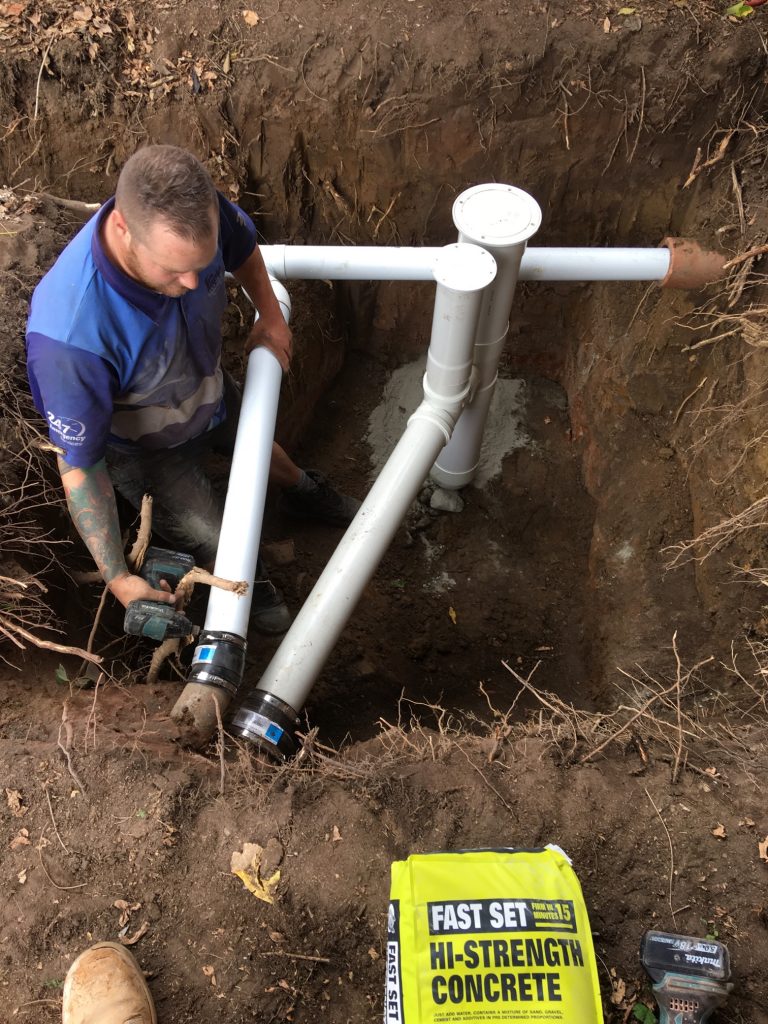
The best repair depends on what we find during the inspection.
Option 1: Targeted excavation and pipe replacement (spot repair)
We dig only where needed, remove the damaged section, and install a new section properly.
Best when:
- there’s a clear collapse
- a section is crushed
- a joint has separated badly
Option 2: Pipe relining (minimal digging option)
Relining can seal cracks and prevent root entry—great for pipes that are damaged but still mostly intact.
Best when:
- cracks are present but the pipe isn’t collapsed
- root entry is recurring
- you want minimal disruption to landscaping
Option 3: Full replacement (for multiple failures)
If the line is failing in several spots, replacement is the most reliable long-term fix.
Best when:
- multiple collapses exist
- the pipe has poor slope and needs correcting
- the material is too degraded to repair
Option 4: Root removal + long-term prevention plan
If roots are the main cause, prevention matters. Otherwise, they return.
What we do:
- remove roots using jetting or cutting tools
- inspect entry points with CCTV
- recommend sealing or repair where needed
- provide maintenance advice tailored to your property
“Is this urgent?” What happens if you ignore a cracked drain
Cracked drains rarely stay the same. Over time, they can lead to:
- bigger blockages and repeated backups
- sewage overflow (health risk)
- sinkholes and erosion
- driveway or paving damage
- pest problems
- higher repair costs later
If you notice overflow, sinking ground, or strong odours, treat it as urgent.
Prevention tips for homeowners (simple habits that protect your drains)
Prevention doesn’t require fancy tools—just good habits.
Keep “pipe killers” out of drains
Avoid:
- cooking grease/oils
- wipes (even flushable)
- sanitary products
- coffee grounds and heavy food scraps
Don’t ignore early warning signs
Slow drains and gurgling are often the first hints. Fixing it early is almost always cheaper than an emergency callout later.
Maintain properties with trees more carefully
If you have mature trees, consider a preventative inspection schedule. It’s cheaper than repeated emergency unblocking.
Ask for a drain health check if issues keep returning
A drain that blocks repeatedly is telling you something. A camera inspection gives you a clear answer.
FAQs: cracked drain pipes underground (quick answers)
How do I know if it’s cracked and not just clogged?
If it keeps coming back, affects multiple drains, or causes wet patches/odours, a crack or root issue is likely—CCTV inspection confirms it.
Can roots come back after jetting?
Yes. Jetting removes roots, but if the entry point remains open, roots can return. Sealing or repair prevents repeat issues.
Is stormwater cracking serious?
Yes—especially if it’s washing away soil, causing pooling, or damaging driveways and landscaping.
What’s the fastest way to locate the break?
A CCTV drain camera inspection, often with location marking equipment, finds the exact spot.
Call Blue Mountains Local Plumber for cracked drain diagnosis and repair in Penrith
If you’re seeing signs like recurring blockages, gurgling drains, bad smells, soggy patches, or gully overflow, don’t wait until it becomes a full backup.
Blue Mountains Local Plumber provides professional help for residential plumbing in penrith, including:
- 24/7 emergency plumbing for urgent drain overflows and backups
- Blocked drain clearing and repairs
- High-pressure water jetting for deep cleaning and root removal
- CCTV drain camera inspections to locate cracks underground accurately
- Drain/sewer cleaning and maintenance to prevent repeat issues
- Leak detection (water, shower, pool, and gas) where needed
- General plumbing repairs and installations (taps, toilets, showers, inspections and testing)
- Gas fitting and gas leak detection
- Hot water system supply, installation, servicing, and repairs (gas, electric, instant, heat pumps, solar, commercial)
- Water filtration solutions for healthier water at home
📞 Call 243125619 now to book an inspection or request urgent help. We’ll find the real cause, explain your options clearly, and get your drains flowing safely again.